Help Olvin Breathe: Continuing a Legacy of Compassion

Kirstin Ivy • October 30, 2025

The Cost of a Breath: Why Olvin Needs You

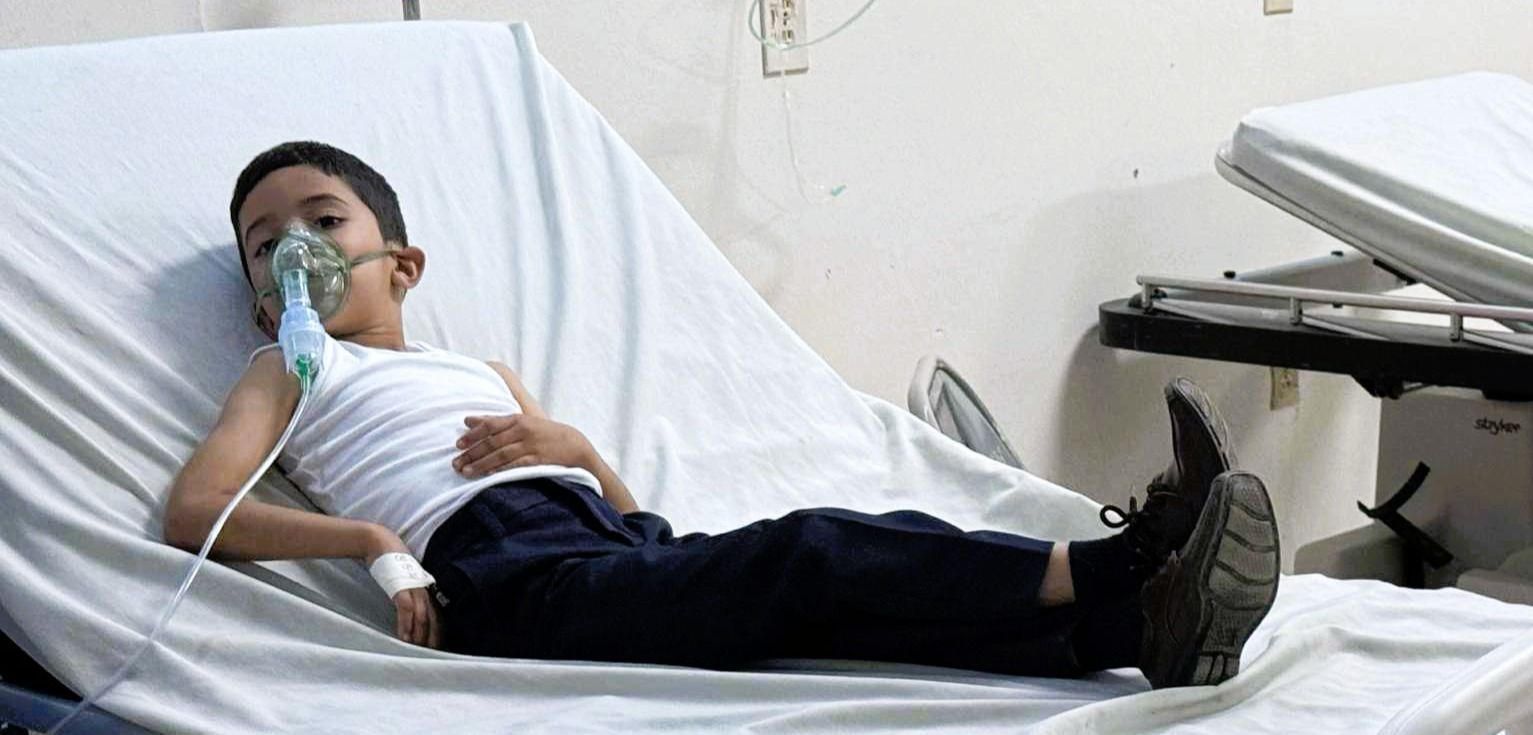
A child wearing an oxygen mask lies in a hospital bed.

A Legacy of Mercy: From Santo Hermano Pedro to Olvin

In the 1600s, a young man from the Canary Islands arrived in Guatemala with dreams of making his fortune. Pedro de San José de Betancur came seeking wealth, but what he found instead changed the course of his life and the lives of countless others.

Walking the streets of Antigua, Pedro encountered the sick, the dying, and the destitute who had nowhere to turn. The hospitals of his day served only those who could pay. The poor suffered and died in the streets. Pedro couldn't look away. He gave up his dreams of wealth and devoted his life to founding a hospital where the poorest of the poor could receive care with dignity.

Santo Hermano Pedro, as he came to be known, didn't just build a building. He built a legacy of radical mercy that would echo across centuries and borders.

A Franciscan's Vision in Olancho

Centuries later, another man caught that same vision. Bishop Maurus Muldoon, a Franciscan missionary and Irish Bostonian, looked at the people of Olancho, Honduras and saw what Hermano Pedro had seen: beloved children of God who needed a place where they could receive care regardless of their ability to pay.

Bishop Muldoon founded Hospital Santo Hermano Pedro Betancourt in Catacamas, naming it after the saint who understood that healthcare is not a privilege for the wealthy but a fundamental expression of human dignity. A missionary through and through, Bishop Muldoon loved the people of Olancho, and they loved him in return. He passed away in June 2024, but his vision lives on in every patient who walks through those hospital doors.

The hospital's president, Dr. Alberto Valladares, carries forward that servant leadership. Before leading the hospital, he served as Chancellor of the Diocese of Juticalpa. He has devoted his life to the people of Olancho. Now he works tirelessly, seven days a week, to provide what he can for the hospital. But the dollars cannot stretch far enough. They are short staffed. Sometimes the lack of medical supplies has dire consequences.

Meet Olvin

Seven-year-old Olvin Emanuel Betancourt lives in a village about half an hour from the hospital with his father and stepmother. When he started having attacks at home, his father didn't know what was happening. He didn't know his son had asthma.

Now Olvin is spending three days in the hospital because he doesn't have a nebulizer at home. The medical staff are treating him, teaching his family about asthma, doing everything they can to help. But when Olvin goes home, the attacks will come again. His family doesn't have enough money to purchase a nebulizer. And the hospital doesn't have enough nebulizers to send one home with every child who needs one.

This is the reality that Santo Hermano Pedro devoted his life to changing. This is the vision that Bishop Muldoon carried to Olancho. This is the work that Dr. Valladares continues every single day.

And this is where you come in.

The Legacy Continues

Healing Hearts Honduras was dedicated to Bishop Muldoon's memory and to the continuation of his vision. We exist to bridge the gap between what the hospital needs and what it can afford. We exist to ensure that children like Olvin can breathe freely, not just in a hospital bed for three days, but at home in their villages.

A nebulizer costs a fraction of what we spend on healthcare in the United States. But for a family in rural Olancho, it might as well cost a million dollars. For the hospital, stretched beyond capacity and understaffed, purchasing enough nebulizers for all the children with asthma and pneumonia who need them is an impossible dream.

Unless we help make it possible.

Santo Hermano Pedro didn't wait for someone else to care for the dying in the streets of Antigua. He rolled up his sleeves and built a hospital. Bishop Muldoon didn't wait for ideal circumstances to bring healthcare to Olancho. He founded a hospital in one of the poorest regions of Honduras. Dr. Valladares doesn't wait for seven-day work weeks to become sustainable. He shows up every single day.

The question is: Will you join this legacy of mercy?

How You Can Help

Hospital Santo Hermano Pedro Betancourt urgently needs nebulizers for children like Olvin who are fighting asthma and pneumonia. Your donation can:

  1. Provide nebulizers for children to use at home
  2. Equip the hospital with additional nebulizers for treatment
  3. Ensure that no child has to stay in the hospital for days simply because they lack equipment at home
  4. Continue the legacy of Santo Hermano Pedro, Bishop Muldoon, and all who have said yes to serving the vulnerable

When you give, you're not just purchasing medical equipment. You're becoming part of a story that began in the 1600s and continues today. You're joining Santo Hermano Pedro in his mission. You're honoring Bishop Muldoon's vision. You're supporting Dr. Valladares in his tireless work. And you're giving Olvin the gift of breathing freely at home with his family.

That's a legacy worth being part of.

Share this article

Your Support Changes Everything

Every donation, every prayer, every share brings healing to families in desperate need. Together, we can ensure no one is denied medical care.

Recent Posts

By Kirstin Ivy August 27, 2026
In 2007, on one of my first trips to Honduras, I was sitting on the front step of a rectory with a fellow missioner, both of us worn out in the particular way you get worn out when you've spent the day trying to solve a problem that shouldn't have been a problem in the first place. The problem was this: we'd worked with the parish priest to start a small nutritional program, volunteers cooking and serving meals to children in a town that was struggling under the weight of poverty and its distance from anything resembling commerce. It should have been simple. Show up, cook, feed the kids who need feeding. But fewer and fewer children were coming to eat. It took us a while to understand why. The children who had the least, the ones the program existed for, had no way of knowing what time the meals were served. They didn't own a clock or a watch. For a while, that hadn't mattered, because their friends who did have clocks would come find them when it was time. But then school schedules shifted, those friends went back to class in the afternoons, and there was no one left to go get them. The poorest children weren't missing meals because the food wasn't there. They were missing meals because no one had come to tell them it was time. I remember sitting with that problem on the step of that rectory, turning it over, half-frustrated and half-amazed that something so basic, the ability to simply know what time it is, could be the difference between a child eating and a child going hungry. That's when my fellow missioner asked me the question I still think about, almost twenty years later: How long do you plan to keep doing this? I didn't have a five-year plan. I didn't have an exit strategy, or a metric for when the work would be "done." What I had was an answer that surprised even me as I said it out loud: "I'll stop when the Holy Spirit tells me to." I've thought about that answer a lot since then: how presumptuous it might have sounded, and how it was also just the truest thing I knew how to say. I didn't have a plan for how long. I only knew I wasn't finished. Twenty years after that first trip to Honduras, I haven't stopped. I'm still doing this work. But it's grown into something I couldn't have designed on that rectory step, even if I'd tried. What began as a handful of volunteers solving a problem about clocks and mealtimes has become Healing Hearts Honduras, and the same town that once needed someone to remember to come get the children is now served, alongside families throughout the region, by a hospital that didn't exist when I first arrived. The children we were feeding then are grown now. Some of them have children of their own who will never know what it was to go hungry because no one told them it was time to eat. That's not something I can take credit for. It's what happens when you stay somewhere long enough, and stay faithful to it long enough, for something small to become something that can hold a lot more people than you ever could alone. I still don't have an end date. I don't think I'm supposed to. But I know a little more now about what it looks like when you don't stop: that feeding program was one piece of a parish partnership I'm still part of today, and it's out of those relationships, sustained over twenty years, that Healing Hearts Honduras grew, reaching farther, into a hospital that serves families throughout the region, than one town and one rectory step ever could on their own. I'll let you know when the Holy Spirit tells me otherwise. In the meantime, there's still a lot of work in front of us, and I'm grateful for everyone who has decided to stay in it with us. This memory is one I don't think I've told publicly before, and it came back to me because Decided Excellence Catholic Media ran a feature this month on my faith journey and the fuller story of how Healing Hearts Honduras came to be. I'm so grateful to them for helping tell it, and if you haven't read it yet, I hope you'll take the time to. Kirstin
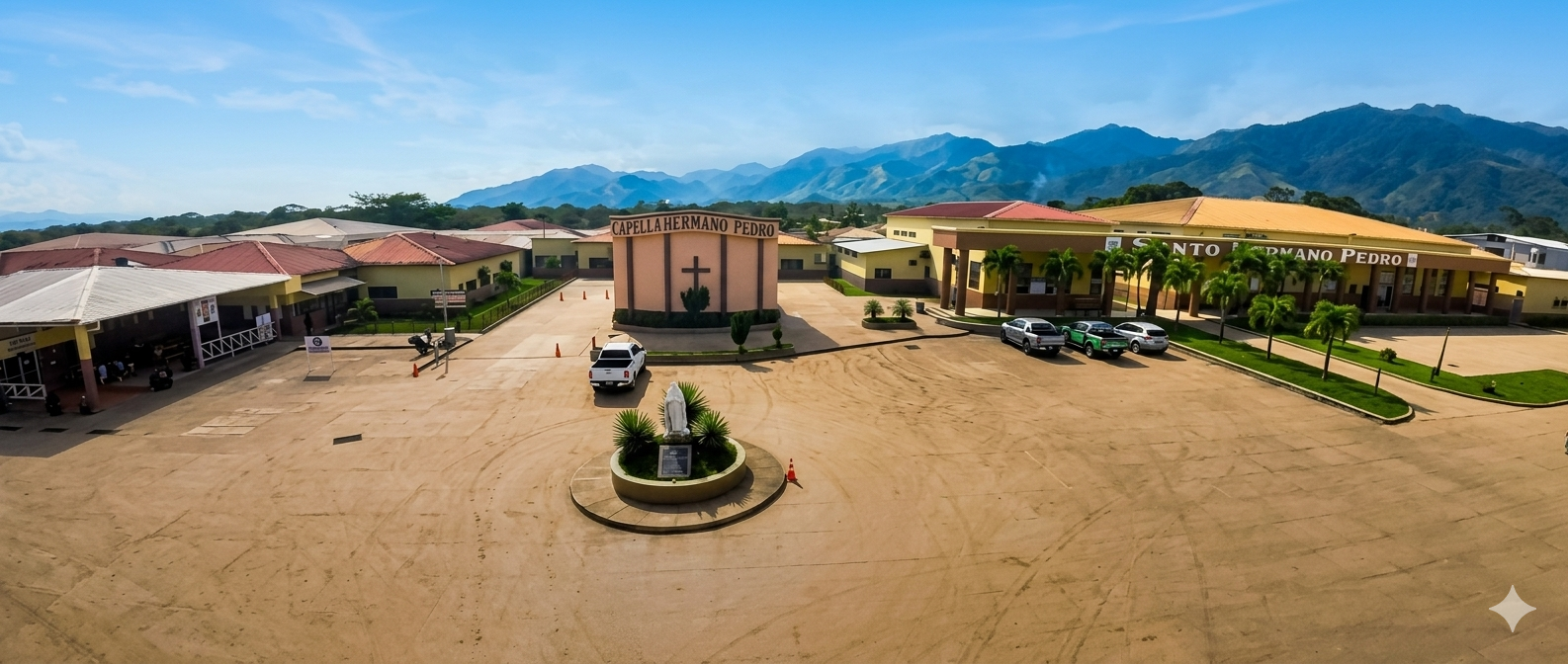
Hospital Santo Hermano Pedro Skyview
By Kirstin Ivy May 17, 2026
I went to Honduras in 2006 on a mission trip. I never planned to stay. Twenty years later, I founded a nonprofit to keep a hospital alive. This is why I keep going back.
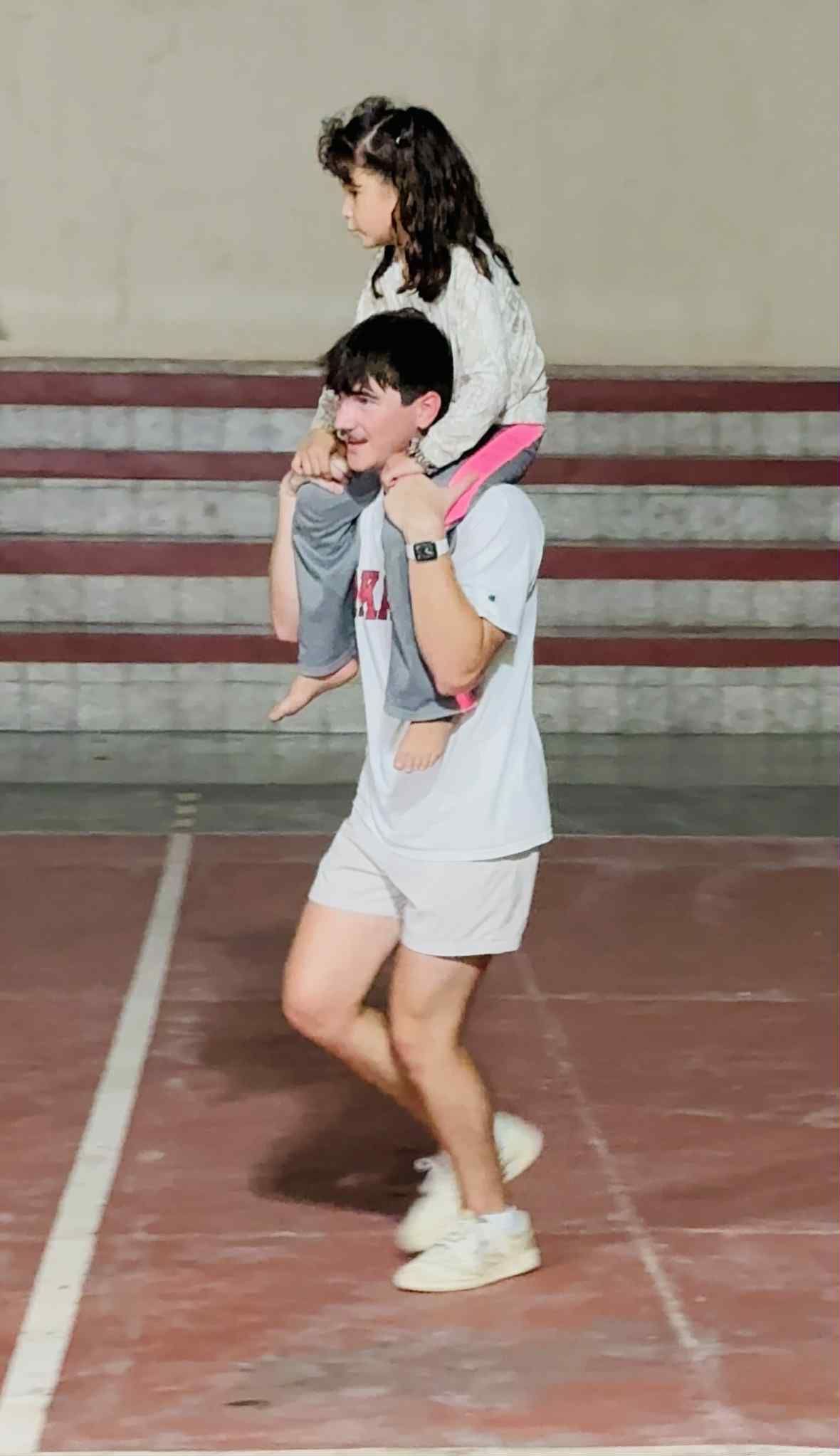
Young person carrying a child on their shoulders on a red floor, possibly an indoor court.
By Kirstin Ivy November 13, 2025
How generosity grows from witness to choice-and why your gift matters
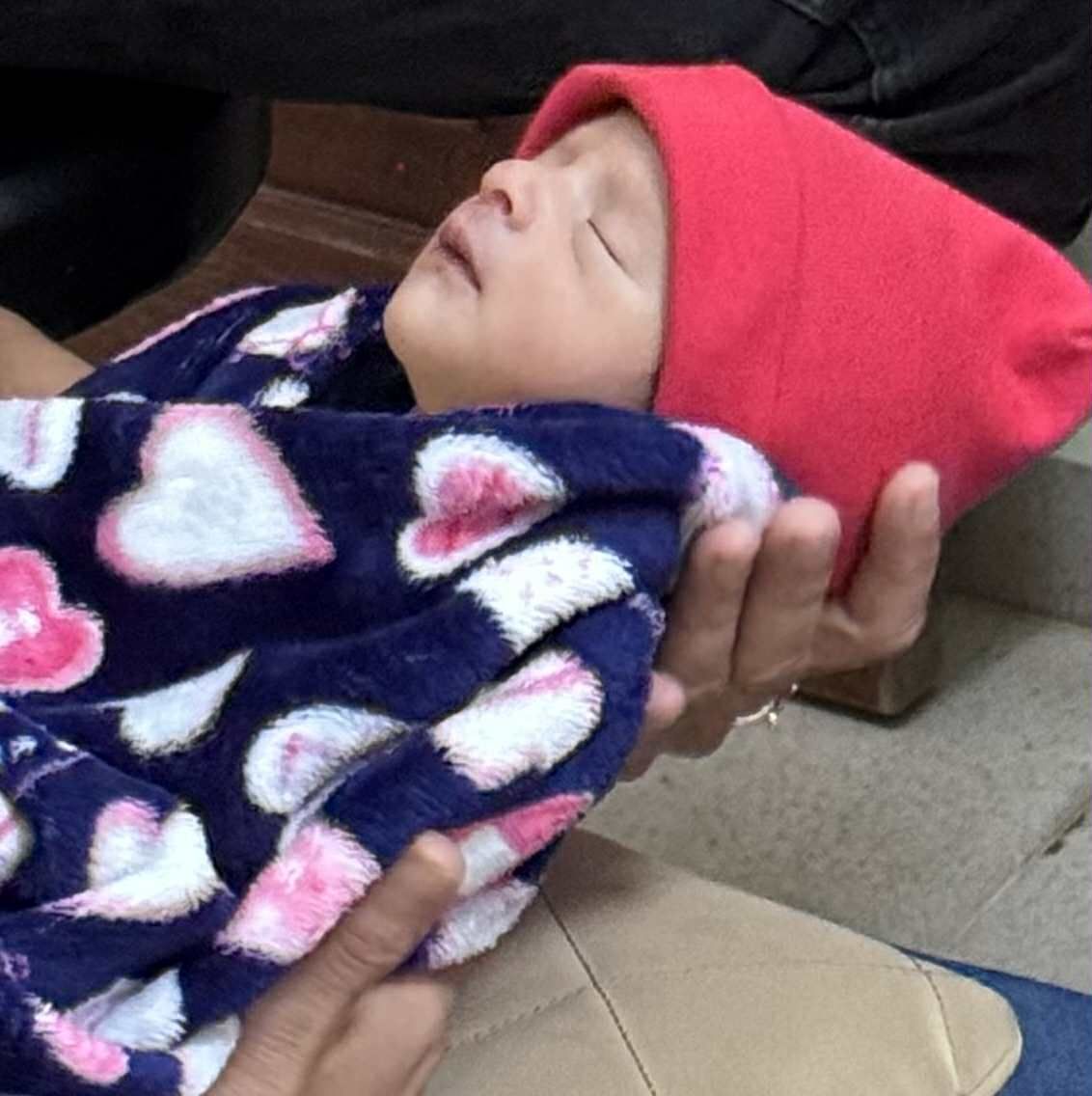
Sleeping baby in a red hat, wrapped in a blue blanket with pink hearts, held by someone.
By Kirstin Ivy October 30, 2025
The Five-Hour Journey: A Mother, a Blood Bank, and a Call to Action